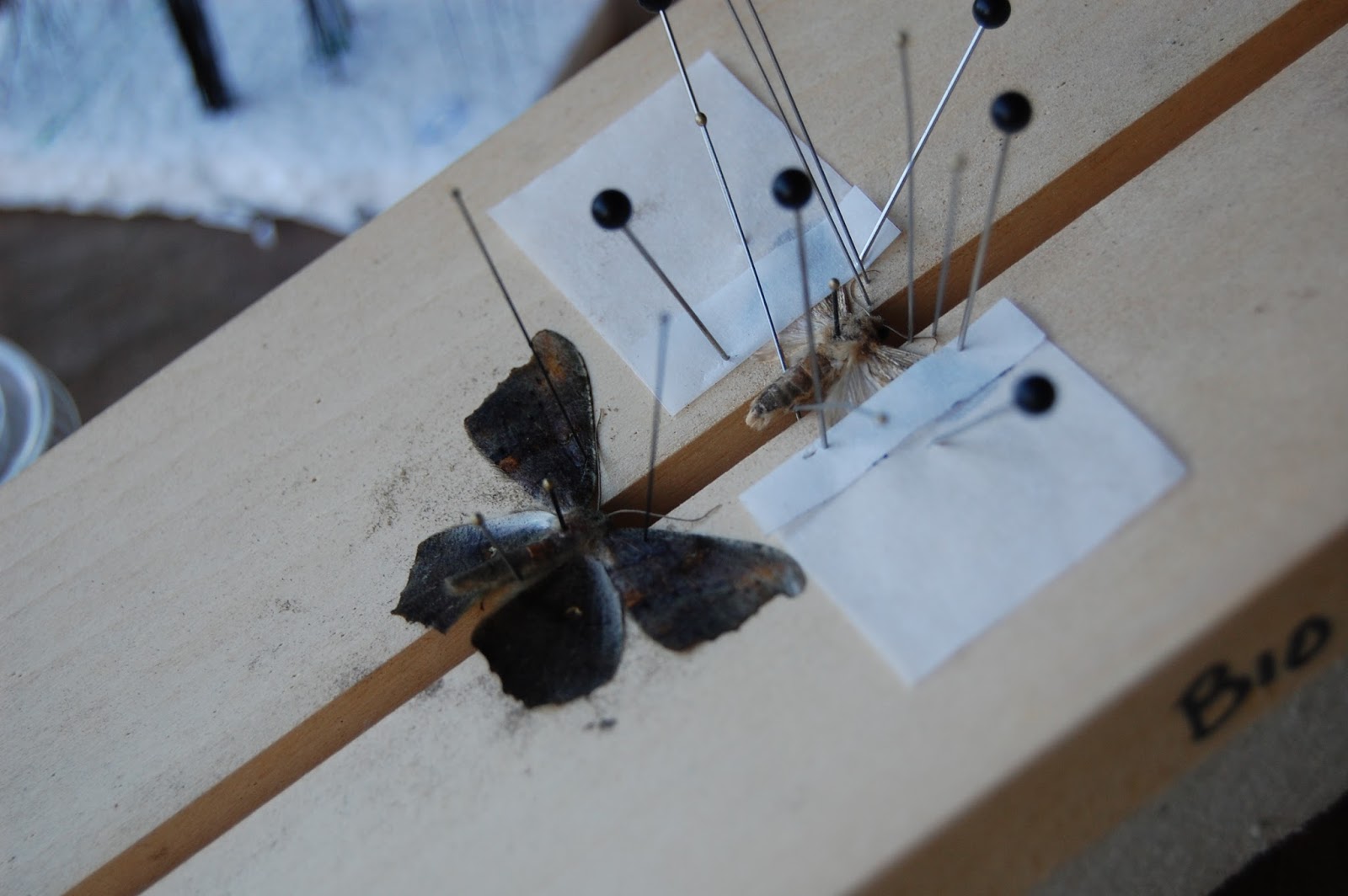
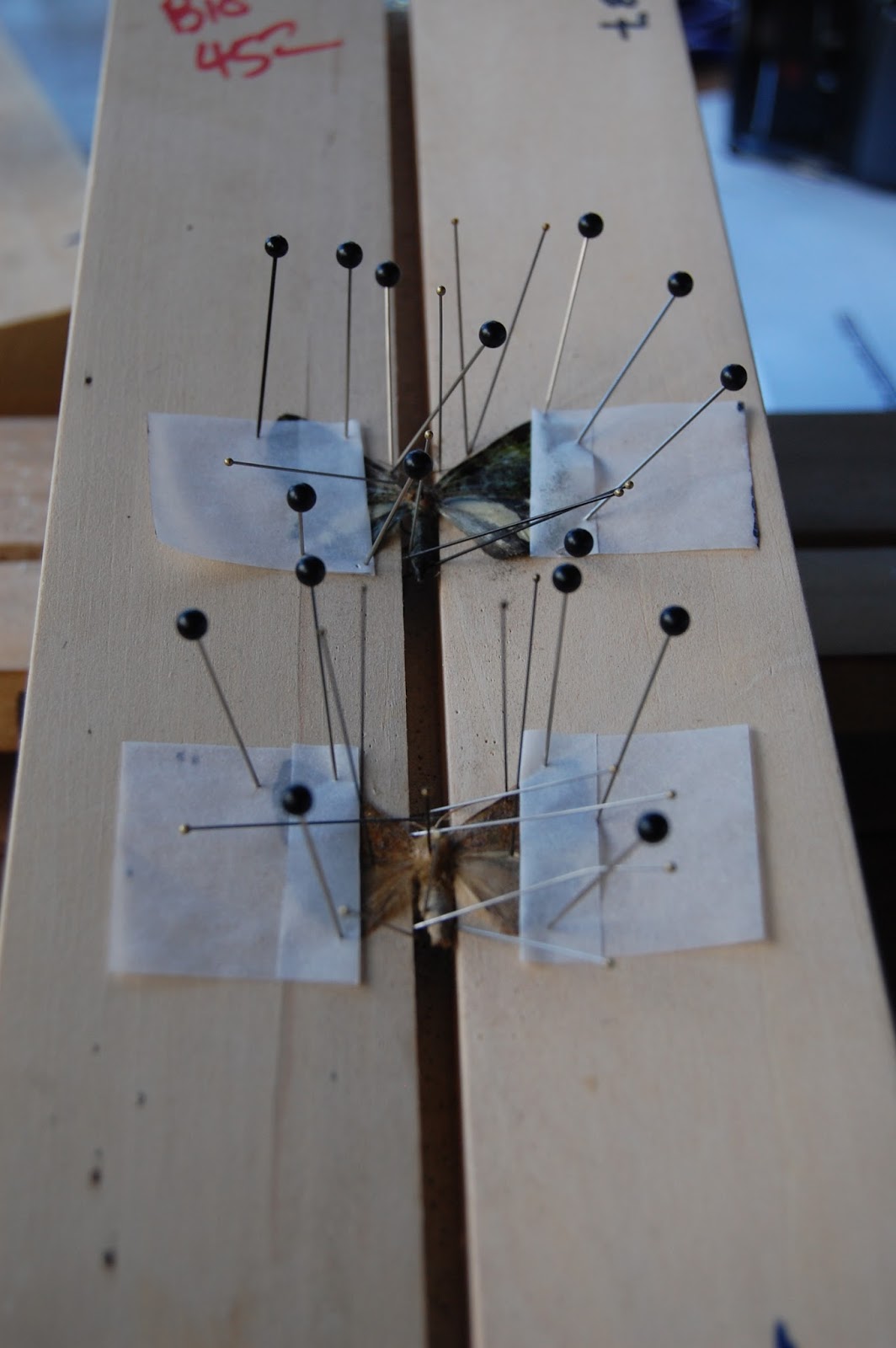
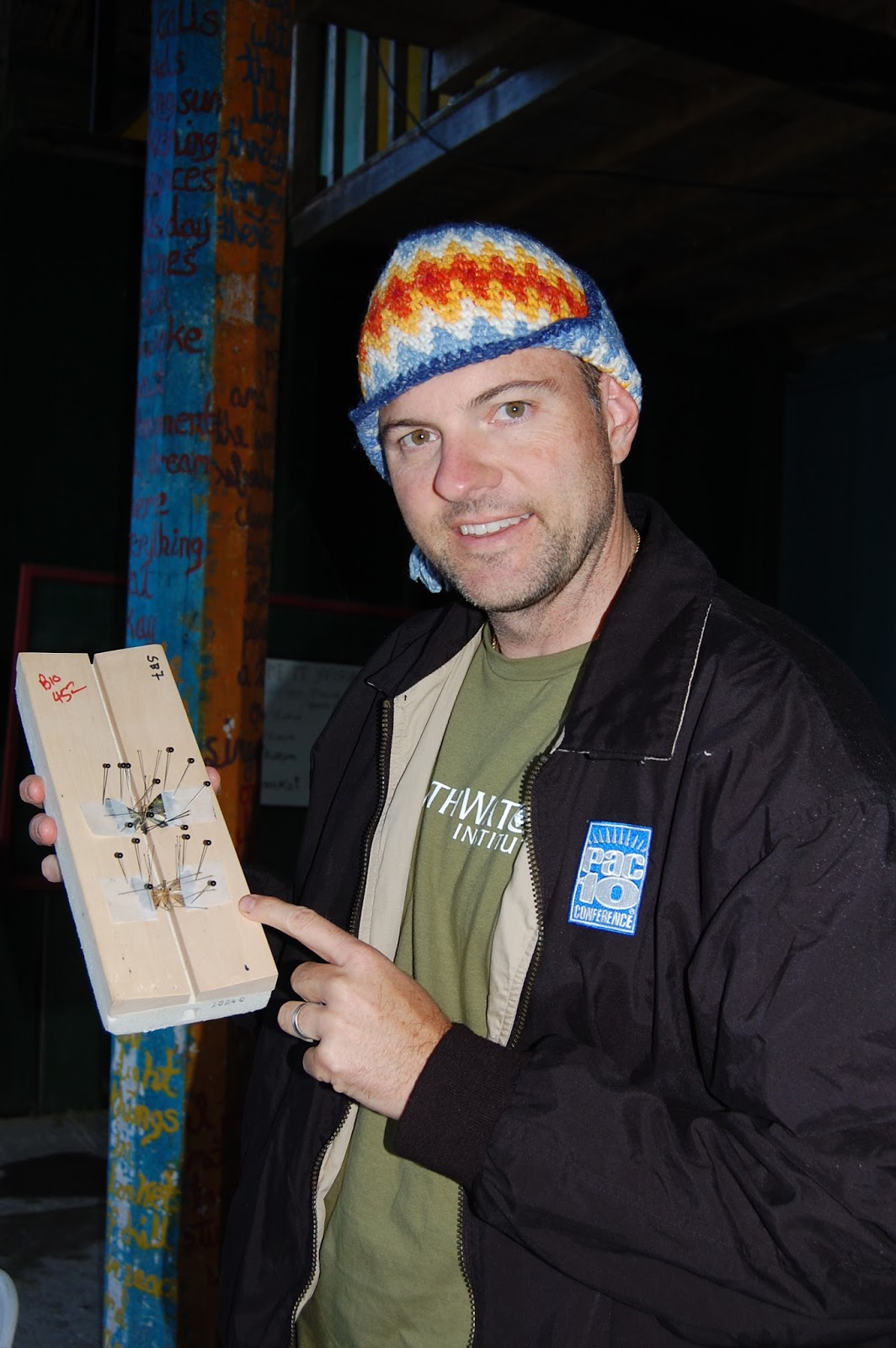
After breakfast, I elected to join fellow Eartwatcher Keith Christiansen at the caterpillar zoo, known as the maquina since it works like a machine as caterpillars enter one end of the barn structure and emerge from the other side as adults (moths, skippers, or butterflies). Our task would be to photograph collected caterpillar specimens with two digital SLR cameras outfitted with macro lenses and soft flashes. The images would be used for the project's digital catalogue and database.
 |
| Dr. Lee Dyer and gusaneros Lucho and Wilmer |
 |
| Keith getting ready to shoot |
 |
| La maquina |

At first, it was slow work as we first shot the number written on the specimen's plastic bag and then removed the leaves and searched for the caterpillar(s). Each bag contained host plant leaves and one to eight (or more) caterpillars (plus random beetles and spiders). We were tasked to photograph each caterpillar from each side and from above (top view). This was easy for some of the larger and/or slower caterpillars, aka orugas. It was rather challenging to photograph the specimens which were exceedingly small or fast-moving. Still, I enjoyed this assignment very much and even continued with it after our lunch break. Having a background in photography and an interest in cataloguing made this task enjoyable. Plus, after shooting what must have been more than 40 specimens, most of them different species, I was really able to view such a wealth of caterpillar variety. We only scratched the surface, but what a remarkable surface it was! In addition, as my partner and I worked, we were visited by long-winged butterflies, dragonflies, and a stick bug who appeared to be rather curious about us and our photographic work.


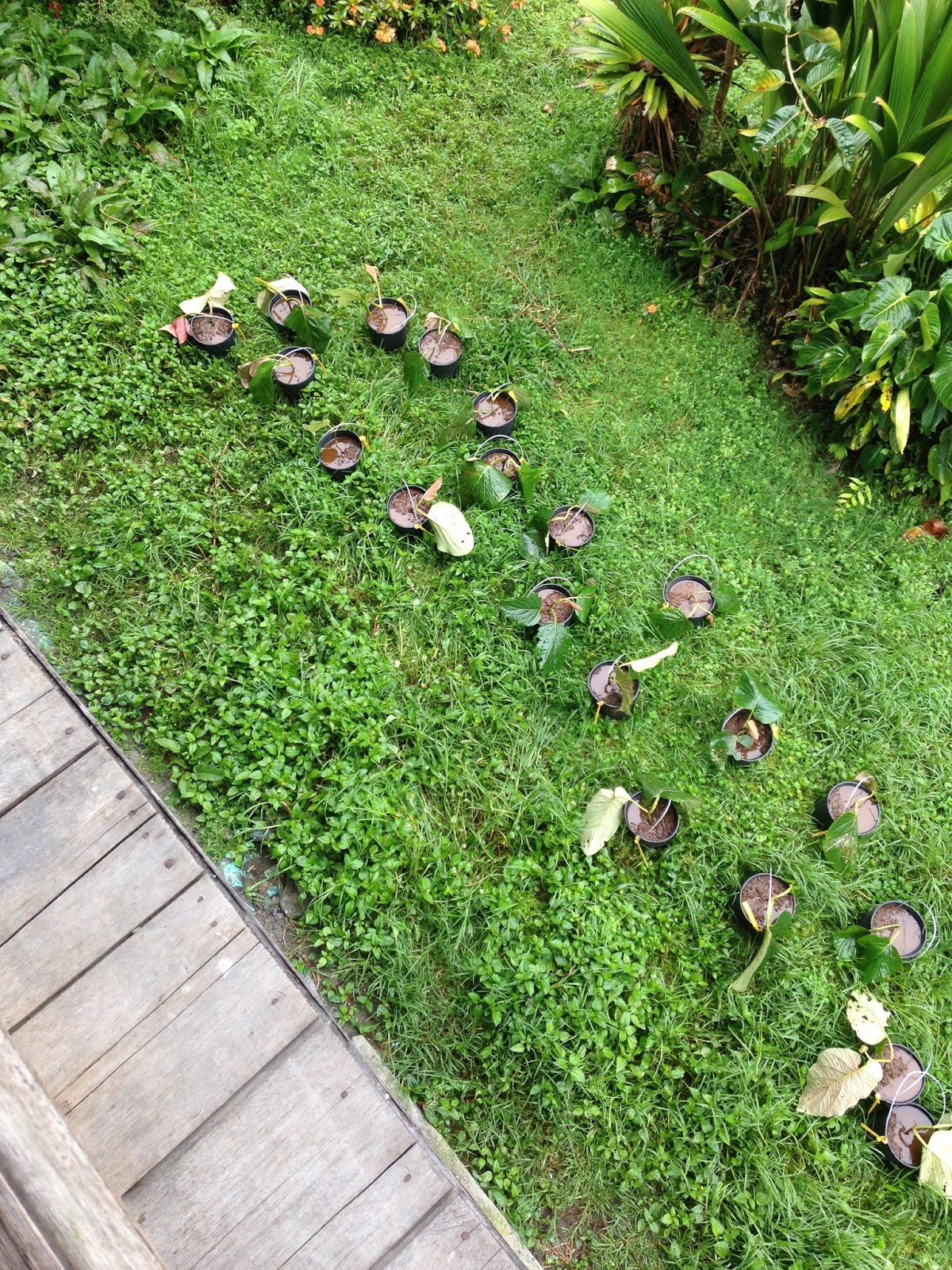
As the afternoon lengthened, lead scientist Lee Dyer called Keith and I from our task in la maquina so that we could contribute to a larger task. Many of the team had assembled to inventory caterpillars found on the leaves of a few piper plants that Dr. Dyer and Dr. Walla had retrieved from local roadsides. These pipers have been growing in distressed areas of the forest and the density of Eois caterpillars on these plants may give an indication as to the health of the rain forest in this region. We meticulously examined each leaf of two piper plants, looking for tiny to "large" Eois instars, caterpillars at various stages of development. Our team searched more than 1200 leaves and found many caterpillars nestled along the veins on the leaves' undersides. As of this evening, our task was incomplete but the researchers seemed pleased with our progress.
Our evening ended with a dinner celebration of Dr. Dyer's birthday and his lecture on immature insects -- the various families of caterpillars studied and identified by Dyer and his research teams. It is remarkable how much they have learned about the role of climate change on biodiversity, specifically caterpillars, plants, and parasitoids. And yet, Dyer mentioned that most of the new species of caterpillars and/or adult moths that they have collected and identified as unique will never be named due to a lack of interest, funding, and taxonomists. As more and more ecosystems are destroyed, Dyer suggests that it is just like libraries burning down without any of the books ever being read. This news is both sobering and sad...
QUESTION: If our tropical rain forests are like libraries full of unread books (unnamed and unknown species), how can we protect them before all of the "books" are destroyed?
 |
| Surprise! Happy birthday, Dr. Dyer! |